exhibition
rot_licht
the exhibition “rot_licht - körper, kampfund kunst”
(red_light - body, combat and art)
is an exhibition by students of the master's programme public interest design at the university of wuppertal that tells the story of an exciting interplay between culture, power and history.
the project was thematically inspired by the special exhibition setting: the former table dance bar ‘eros centre’ at wesendonkstrasse 18 in wuppertal. from 14 to 28 march, visitors are invited to discover the complexity of red light in this meaningful location by means of four main themes. the aim of the exhibition is to break with conceptual associations in order to gain new perspectives on the seemingly familiar.
during my master-studies:
open 8 days
400-560 visitors
concept
research / curation – part 1
corporate design
production supervision
final artwork
part 1
the history of prostitution ↓
the first section of the exhibition is dedicated to the most immediate association of the term red light, which is closely linked to the location.
in the form of a timeline, it chronologically shows the historical stages that sex workers have passed through from antiquity to the present day.
by means of various digressions, visitors are invited to delve deeper into individual historical periods, such as prostitution during the nazi era.
the station portrays the changing social significance and perception of prostitution globally, nationally and locally with a view to the historical context.
the cooperation with the wuppertal city archive enables the presentation of revealing historical artefacts with a direct connection to the city.


part 2
between people ↓
in analogue photography, red light is used to reveal the invisible.
the third section of the exhibition is dedicated to this effect of red light, both literally and metaphorically.
the station shows human facets in analogue black and white portraits and questions the social prejudices that shape our image of each other.
snapshots of different people, combined with personal quotes, convey a feeling for the people portrayed that goes beyond labels and hard facts.
the photographic work is an appeal to allow interpersonal experiences, to dare to look behind the façade and to face up to the complexity of human existence.


part 3
red light ↓
the second station of the exhibition works with red light as a powerful element of artistic staging, playing with associations that are linked to the colour red.
the section tells of these attributions along dante's work ‘the divine comedy’.
the tripartite division of this tale, which is regarded as world literature, into hell, purgatory and paradise is reflected in the structure of the immersive installation.
in three separate chambers, visitors have the opportunity to experience the colour red as a symbol of sin, redemption and love.
the experiential narrative confrontation makes new interpretations of the concept of red light tangible, putting rational connections in the background and instead placing human emotions at the centre of our perception.


part 4
red light as healing
healing through resistance ↓
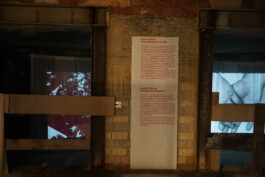
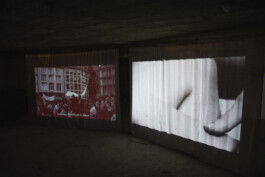
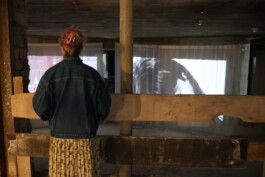
In the final section of the exhibition, infrared light as a source of heat becomes the central metaphor, describing an energy that penetrates deep into our bodies, triggers processes and has a healing effect. The work relates this energy to our society, which is riddled with divisions and challenges. A video installation depicts healing from two perspectives: healing that becomes visible as a combative, transformative act through resistance, and healing that requires mindfulness as something interpersonal. The two perspectives reflect the duality of healing processes. The red light penetrates both levels, revealing what is often overlooked and reminding us that healing is not only a personal act, but always a social one as well.


special part
"eros"-trail ↓
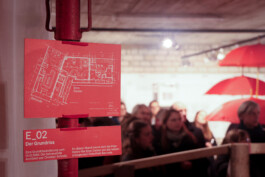
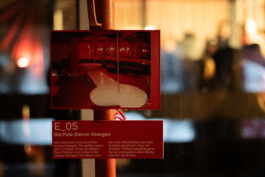
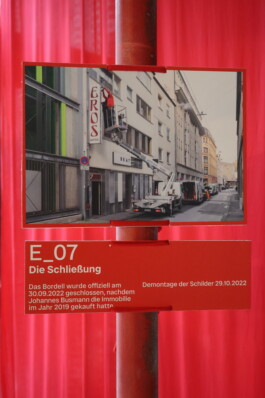
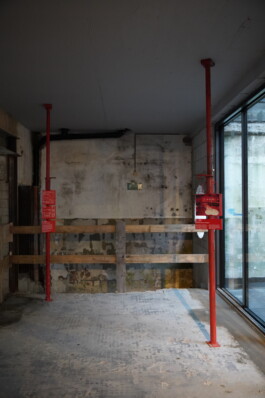
The Eros Trail formed an additional layer within the rot_licht exhibition. It led through the space and referred directly to the history of the property. The shell of the building in which visitors roamed was formerly a brothel and table dance bar. The trail displayed archive material, plans and images at selected spots: visitors could see previous features such as the bar and dancing pole. The dots also locate the past. Design-wise, the Eros Trail picks up on the shell construction character. Red pillars set highlights in the grey construction-site-aesthetic. In contrast to the corporate design of the exhibition, white on red, the trail appears as an intervention.


General
In summary, the exhibition presents a complementary spectrum of different perspectives, forms of representation and intended effects. It addresses the significance of Hofaue as a former red-light district, thus taking a first step towards coming to terms with its past.

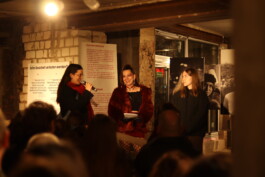
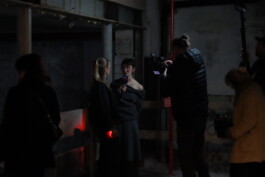


Vernissage
exhibition
rot_licht
concept
research / curation – part 1
corporate design
production supervision
final artwork
the exhibition “rot_licht - körper, kampfund kunst”
(red_light - body, combat and art)
is an exhibition by students of the master's programme public interest design at the university of wuppertal that tells the story of an exciting interplay between culture, power and history.
the project was thematically inspired by the special exhibition setting: the former table dance bar ‘eros centre’ at wesendonkstrasse 18 in wuppertal. from 14 to 28 march, visitors are invited to discover the complexity of red light in this meaningful location by means of four main themes. the aim of the exhibition is to break with conceptual associations in order to gain new perspectives on the seemingly familiar.
during my master-studies:


the slate museum in haut-martelange ↓
the first section of the exhibition is dedicated to the most immediate association of the term red light, which is closely linked to the location.
in the form of a timeline, it chronologically shows the historical stages that sex workers have passed through from antiquity to the present day.
by means of various digressions, visitors are invited to delve deeper into individual historical periods, such as prostitution during the nazi era.
the station portrays the changing social significance and perception of prostitution globally, nationally and locally with a view to the historical context.
the cooperation with the wuppertal city archive enables the presentation of revealing historical artefacts with a direct connection to the city.